Stargazing in Devon | Night Skies at Grey Willow Yurts
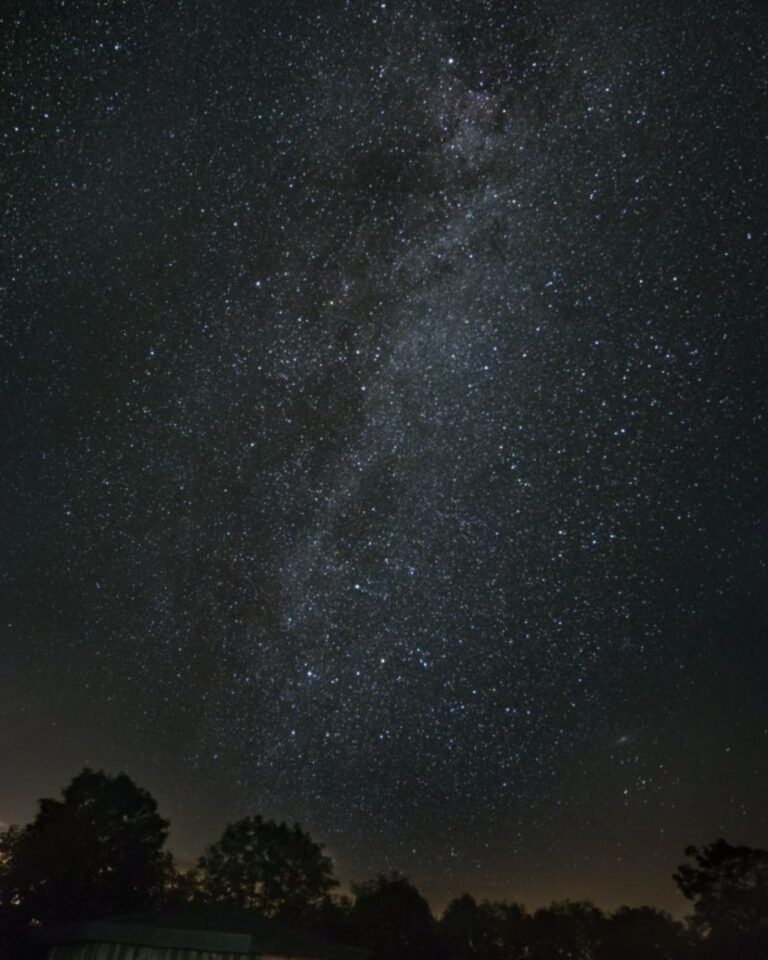
We are very well located for stargazing in East Devon. At around 51° North latitude, our peaceful countryside setting allows clear views of the night sky and many well-known constellations throughout the year, and seasonal highlights appearing as the months change.
On clear nights, guests can enjoy peaceful evenings outdoors, looking up at the stars in a calm countryside setting.
Binoculars for Stargazing
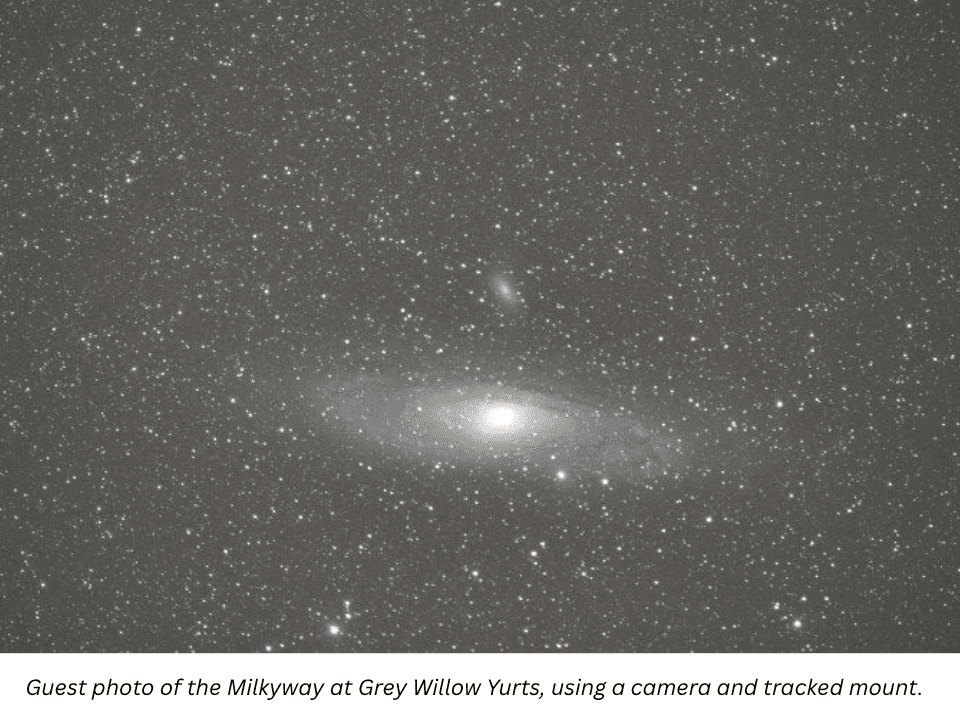
To help guests make the most of the night sky, binoculars are provided in every cabin. They are perfect for gentle stargazing, allowing you to explore star clusters, follow the Milky Way, and take a closer look at highlights such as the Andromeda Galaxy, the Pleiades, and details on the Moon.
No specialist knowledge is needed. Simply step outside, give your eyes time to adjust, and enjoy the sky at your own pace.
What You Can See in the Night Sky
Below is a simple guide to what guests can expect to see from Grey Willow Yurts on clear nights.
For guests who would like to learn a little more, Go Stargazing provides a clear and easy guide to what can be seen in the night sky throughout the year.
Seasonal Highlights
Spring (March to May)
Leo, bright and easy to recognise
Boötes, home to Arcturus, one of the brightest stars in the sky
Virgo, rich in distant galaxies and particularly interesting when using binoculars
Spring is a good time for exploring galaxies under darker skies.
Summer (June to August)
Cygnus (The Swan)
Lyra, with the bright star Vega
Aquila, with Altair
These three form the Summer Triangle, which stands out clearly on warm, clear evenings.
Scorpius can sometimes be seen low in the southern sky, with the red star Antares appearing on especially clear nights. Sagittarius, also very low on the horizon, marks the direction of the centre of the Milky Way, which may appear as a faint glow on dark, moonless nights.
Autumn (September to November)
Pegasus, recognised by the large Great Square
Andromeda, home to the Andromeda Galaxy, which can be seen with the naked eye under dark skies
Perseus, linked to the Perseid meteor shower earlier in August
Autumn is an excellent season for relaxed stargazing and binocular use.
Constellations Visible All Year
These constellations can be seen throughout the year from our location in Devon:
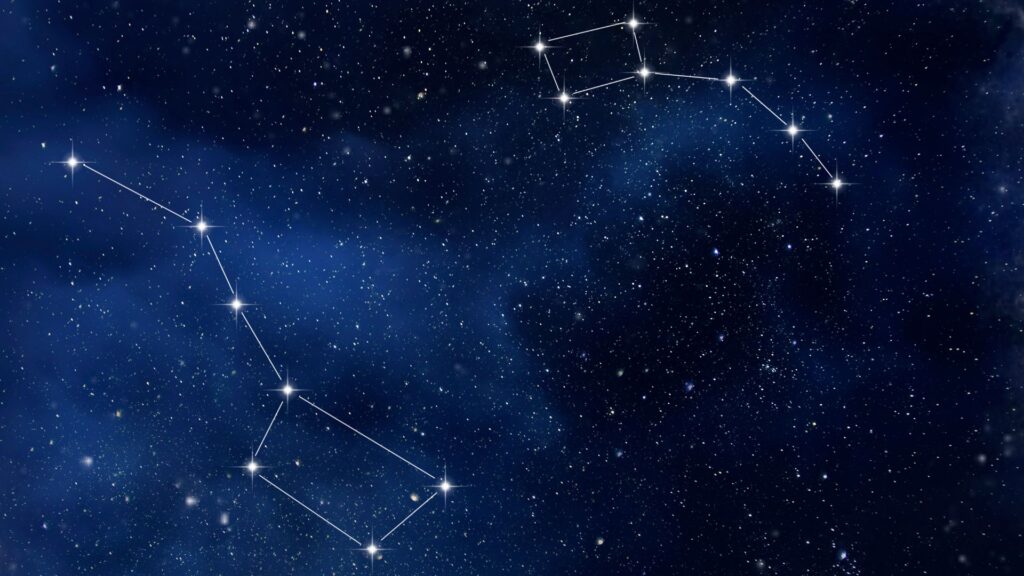
Ursa Major (The Great Bear or Big Dipper) One of the most recognisable patterns in the night sky and useful for finding your bearings.
Ursa Minor (The Little Bear or Little Dipper) Home to Polaris, the North Star, which always points north.
Cassiopeia Easy to spot thanks to its distinctive W shape.
Cepheus A quieter constellation, but rewarding to find on darker nights.
Draco A winding constellation that sits between Ursa Major and Ursa Minor.
Enjoy Grey Willow Yurts by Day
Stargazing is just one part of staying at Grey Willow Yurts. During the day, the surrounding countryside offers plenty of space to slow down and explore, with walks, wildlife, and local places to visit all close by. You can find more ideas on what to do nearby on ourIn the Area page.
Guests often spend their days:
Walking and exploring the local countryside
Watching wildlife and enjoying open views
Reading, resting, and spending time outdoors
Sharing relaxed meals and unhurried time together
Grey Willow Yurts is designed to offer space, comfort, and calm, making it easy to enjoy the outdoors by day and the night sky once the sun goes down
We use cookies to ensure that we give you the best experience on our website. If you continue to use this site we will assume that you are happy with it.OkNo, thank you.